Restoring a thriving coastline at Wainui
Herbertville farmer Mark Speedy is on a mission to restore bird and marine mammal life to the Wainui Beach coastline where his family has farmed since 1856.
At Pipi Bank Sation, so named for the tasty shellfish found on the sandy beach, Mark is the fifth generation of Speedys to run the extensive, coastal hill country sheep and beef farm, which has six kilometres of beach on its boundary.
Due to coastal erosion, the station boundary extends out into the sea, he explains.
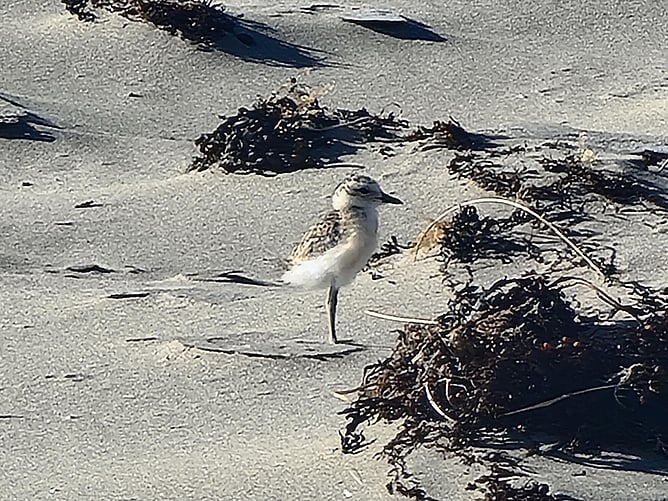
The sand dunes at Wainui Beach are home to a number of rare seabirds including the oystercatcher, royal spoonbill, red-billed and black-billed gulls, Caspian terns, white fronted terns, black shag, pipit, wrybill, bar-tailed godwits and the endangered Northern New Zealand dotterel (tūturiwhatu).
Previously, the family had allowed freedom camping on the beach front, but 10 years ago, Mark made a decision to fence off the beach due to health and safety and public liability concerns, and Worksafe legislation.
It also provided an opportunity to enhance a known coastal habitat for the endangered birds. He accepts it hasn’t always made him popular, but he hopes that with education and awareness, people will get in behind the conservation efforts.
“The coast line is dying and that’s my driver, giving it a fair go. We’ve already lost the cockle beds, the tuatua are just about gone and we thought the pipis were extinct too. If we can raise awareness with people maybe they will help out when they’re down on the beach,” Mark says.
For Mark, it’s about preserving what is there, giving the wildlife a chance. In order to do this, it takes a team effort, things like keeping dogs on leads so they don’t make a meal of vulnerable chicks and not driving quads on the sand dunes where birds are nesting.
“If you see a seal on the beach having a rest, don’t annoy it and throw sticks at it until it goes back into the sea.
“I would like to see the coastline thriving, like I remember it. The birds are just a start. I would like to see a marine reserve at the south end of Herbertville to give the wildlife a fair go. But it also means that when people go for a fish, for example, they have a better chance of getting a meal. We watch with sadness as people come and take more than they need.”
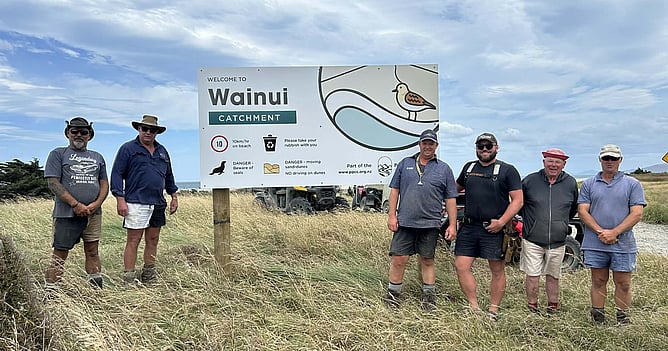
The recently formed local Wainui Catchment Group, a member of the Puketoi to the Pacific Catchment Collective (PPCC), has recently erected signage encouraging visitors and locals to consider the fragile habitat, and the wildlife that live there.
The normally quiet beachside settlement is fairly remote, but experiences an influx of visitors over summer, which coincides with the time when the birds are breeding and chicks are most vulnerable.
This summer, Mark was thrilled to see two dotterel chicks and three oystercatcher chicks were raised, a rare success story and reward for his dedication. This is the first time in 10 years he has witnessed successful breeding.
The fact there is no Government mandate to help private landowners with conversation efforts like his adds to the challenge, and having the catchment group take an interest is a step in the right direction, he says. But there is still work to do.
“More education is needed, particularly in schools, and it would be great if the community became more proactive with monitoring the nesting areas.”
Mark points to Pukawa Wildlife Management Trust at Pukawa, Lake Taupo, where he has a bach, as an excellent example of community involvement.
Pukawa is a small urban settlement 15 minutes west of Turangi where residents and bach owners help maintain over 500 traps and 150 bait stations to control predator threats to the wildlife. There is a ‘no cats’ policy in the community and bird life is thriving. At Pipi Bank, wild cats are a major issue, and Mark has already cage trapped 14 this year.
The PPCC is currently rolling out stage one of its pest control programme, with a monitoring programme underway in all four catchments to determine what pests are present. It is expected that feral cats will be a major target of pest control efforts in the Wainui catchment.
Mark says Herbertville is a great little community, with a golf club offering sea views, a country pub and tennis at nearby Wimbledon. He would like locals and visitors alike to help the special seabirds not just survive, but thrive.
He has a simple plea. “We need more community help to monitor the beach, particularly in the November, December and January period when these chicks are most vulnerable. If you are driving on the beach, stay below the high tide mark and above the low tide mark (to protect shellfish beds). Slow down and drive around all marine animals. If you bring your dog, keep it leashed or leave it in the vehicle.”
The plight of the dotterel
Department of Conservation (DOC) Principal Science Advisor and co-author of the Field Guide to the Birds of NZ, Hugh Robertson, says the population of the Northern New Zealand Dotterel has increased greatly over the last 20 to 30 years.
They have expanded their geographical range onto the coasts of the southern North Island.
“This has been mainly thanks to community groups, DOC, and regional and local councils working together to protect the coastal nesting habitat and the nests, eggs, and chicks of the species,” Robertson says.
“This has been done by fencing off nests to prevent vehicles running over eggs or young chicks, erecting signage to alert people to the presence of nesting dotterels, and asking people to keep their dog on a lead, as well as trapping nest predators such as mustelids and hedgehogs.”
Northern NZ Dotterels have only recently colonised the Wairarapa coast from the north, and Roberston says the best way to keep them nesting at sites like Herbertville is through community group efforts, to give them the best chance possible to breed successfully.
For more on Mark’s story and the work happening along the Wainui coastline, read the full article here:
https://www.farmersweekly.co.nz/news/husbanding-sheep-beef-and-endangered-birds/