From plan to planted: how PPCC is helping farmers get erosion control right
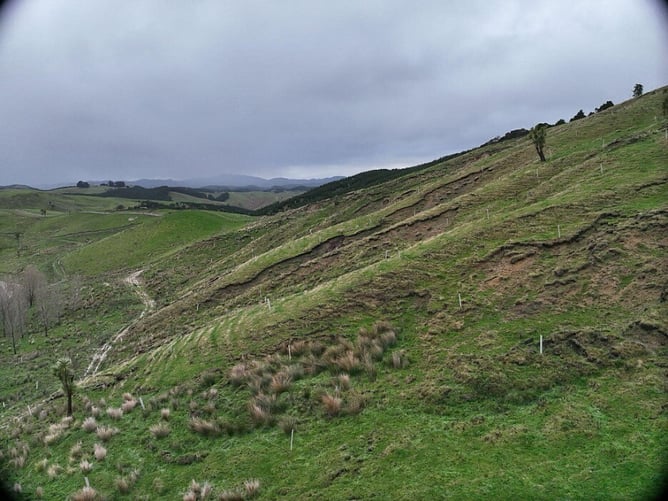
Poles for erosion control are just the ticket at Huiarau, a hill country sheep and beef farm near Akitio. Working collaboratively with the regional council, catchment collective and mapping technology platform CarbonCrop, the farm was able to make a plan, secure funding and get poles in the ground.
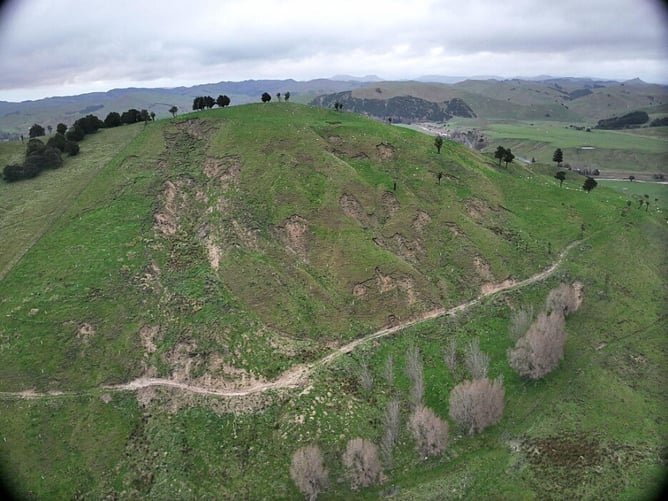
A member of the Puketoi to the Pacific Catchment Collective (PPCC), Huiarau put 275 poles into 4.7 hectares of steep, erosion-prone ground. It started as a test case for PPCC: could we help take dealing with erosion-prone land off a farmer’s to-do list, from rough idea through to a planted, funded slope? It worked, and PPCC is now planning similar conversations with more farmers across the catchment this spring and summer.
The challenge
It's the kind of ground that ends up on every erosion control wish list: steep, slipping, unproductive pasture. It needed to be stabilised it before it got worse, but it's the kind of job that's easy to let slide down the to-do list when there's no one keeping it moving.
PPCC leads the planning, Horizons weighs in where it counts
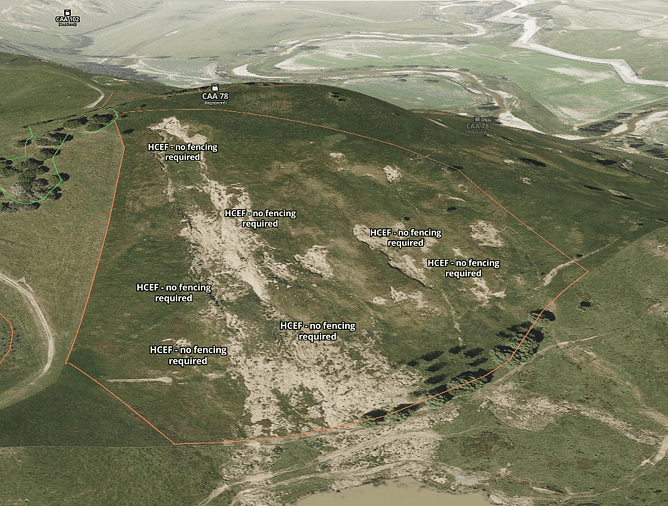
PPCC worked with the farm first, using the CarbonCrop platform to map the property and rough out a planting plan. Once there was a plan to look at, PPCC brought in Courtney Skou, the farm's Horizons Regional Council Land Management Advisor, to check it against her expertise: the right species and size for the windy site, and how it fitted the Hill Country Erosion Fund.
“Because I had been to the farm before, working through the plan on the CarbonCrop platform was enough to refresh my memory of the site. I didn’t need to make a trip out to the slip, or follow up afterwards to confirm the grant funding available,” Skou says.
“It was easy to see it was a windy site, so I could order the correct variety. Due to stock management policies on the farm, I was also able to order shorter poles instead of the standard three-metre ones,” Courtney says.
Your local LMA can also provide site-specific advice where needed, helping identify priority planting areas and recommend appropriate pole spacings and varieties for the conditions.
Getting it in the ground
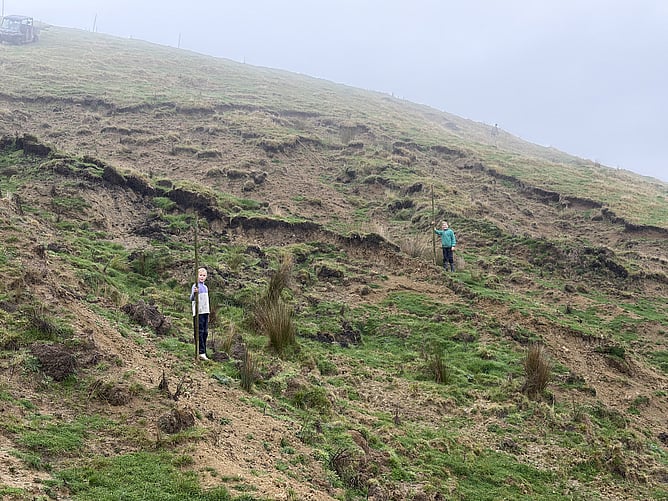
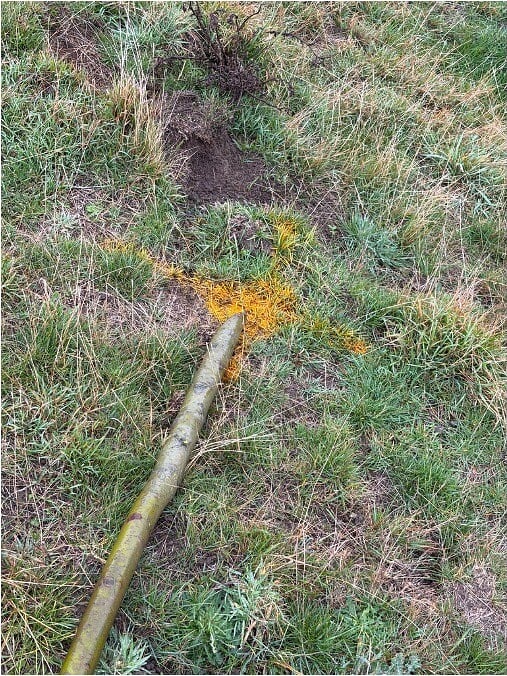
Once the plan was set, it was time for the hard part. Over the school holidays, the family put in the poles across that same steep, messy ground, spray-painting each spot, drilling a pilot hole, delivering the poles, ramming them home, and fitting guards. Spread across several days, it added up to a few days' work.
"Once we had the plan, we marked the spots so we could find the line even on really rough ground. We started at the top and worked down, row by row, about ten metres apart, so once the first couple of poles were in, it got a lot easier to eyeball where the rest belonged."
- Alexander Hunink, General Manager
What's next
This was a test case, and it worked well enough that we're building on it. Over spring and summer, PPCC will be having the same kind of planning conversations with more farmers across the catchment: build a plan first, bring in your local LMA to advise on site support around priority planting areas, spacings and correct varieties, and carry that same plan through from funding application to the day the poles go in the ground.
If you've got erosion-prone land you'd like help planning for, want to understand what it could be worth if registered in the ETS, or just want to check what you've got is eligible for support, get in touch with June.