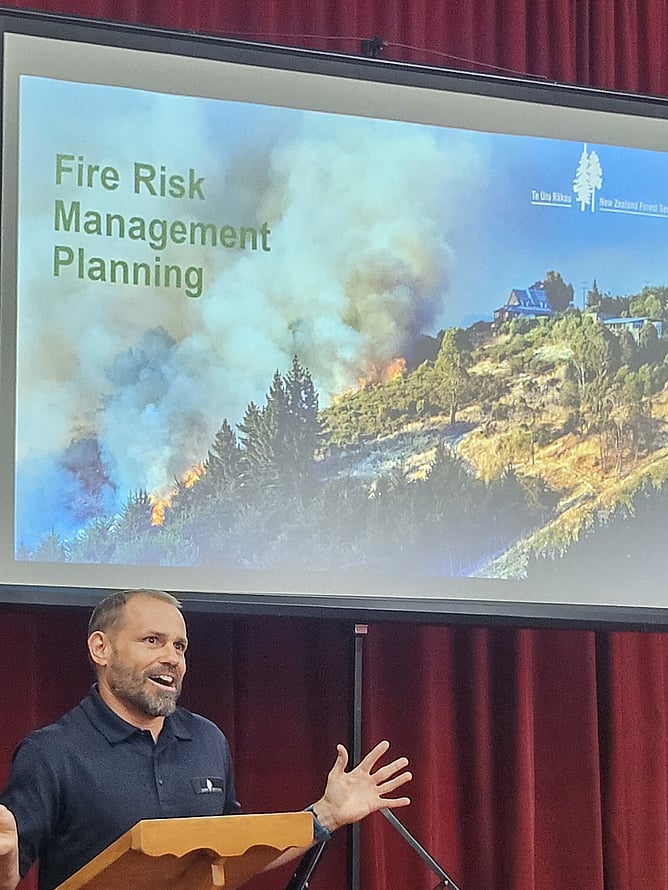
Preparing for fire – what you need to know
When it comes to fire, preparedness matters. There are some practical actions you can take to reduce risk on rural properties and the key considerations are access, water supply, communications and response arrangements.
This summer there is an elevated, but not unprecedented, risk of fire and a strong El Nino forecast in place for our region. Fire and Emergency New Zealand (FENZ) representative, Clayton Locke, says there is still a value window for preparation that could pay dividends later on in summer.
The greatest risk is when dry fuels, strong winds and an ignition source occur at the same time. FENZ priorities are life first, followed by property, then vegetation.
In the Tararua district, fires can become a logistics problem before they become a fire problem. This is due to operational challenges for FENZ, like long travel times, limited water availability, patchy communications and aviation dependence for remote incidents.
What can you do now?
Actions landowners can take now include:
PROPERTY PREPAREDNESS
Review your farm evacuation plan and evacuation trigger points
Ensure rapid numbers are clearly visible
Confirm water supplies remain accessible
Maintain 4m x 4m access clearance where possible
Manage vegetation around homes, sheds and critical infrastructure.
STAFF & CONTRACTOR AWARENESS
Brief staff and contractors
Review communications arrangements
Check short and long-range weather forecasts before undertaking higher-risk work.
MACHINERY OPERATIONS
Carry firefighting equipment
Remove dry vegetation from machinery
Conduct regular inspections
Implement mitigation measures to prevent unwanted or escaped fires
Consider postponing higher-risk work during strong wind events.
Address access, water supply, communications and response arrangements before they are needed. In the event of a fire, make decisions early, avoid being forced into a reaction position, as conditions can change quickly.
“The key message is preparedness matters. It is something we can all do together. Everyone has a role to play in helping reduce unwanted fires, and reducing impact,” Locke says.
Ministry for Primary Industries representative for Tu Uru Rākau – New Zealand Forest Service, Ben Disney, suggested all landowners with trees or vegetation complete their template for a wildfire risk management plan.
Prioritise your assets, if a fire was burning on your property:
People on site
Home
Animals
Farm or property infrastructure
Vehicles
Forestry block
Others
Prepare a plan
Put in fire breaks if you can – on hill country it is not always practical. This gives fire fighters more options and confidence, even 1m wide will do a lot. Think of a fire break as infrastructure
Water supply
Green fire breaks – not all plants burn the same. Green fire breaks are about selecting less flammable plants. Think of it like a shelter belt.
Equipment
Access – make sure fire trucks can get in and out of your property
Structures themselves are a high risk, especially gutters. Keeping gutters clean goes a long way to protecting your house from flying embers.
Green fire breaks
Not all plants burn the same. You may like to create ‘green’ shelterbelts by choosing low flammability trees and shrubs for shelterbelts, fuel breaks or amenity planting near buildings.
Fire-resistant plants have leaves that are moist and supple and don’t ignite easily, not much dead wood accumulated within the plant, and watery sap that doesn’t have a strong odour.
Some of the best low flammability plants:
Exotics: Poplars, birch, maple, willow and ash
Natives: Lancewood, five finger, karamu, karaka, poroporo, kawakawa/peppertree, taupata, griselinia.
But remember, all plants can become a hazard if they are water stressed or dead.
Read more here: https://www.ppcc.org.nz/fire-readiness-event/