Freshwater healthProtect rivers by reducing sediment and nutrients, fencing, planting, and supporting sustainable farm practices.
Owahanga Catchment
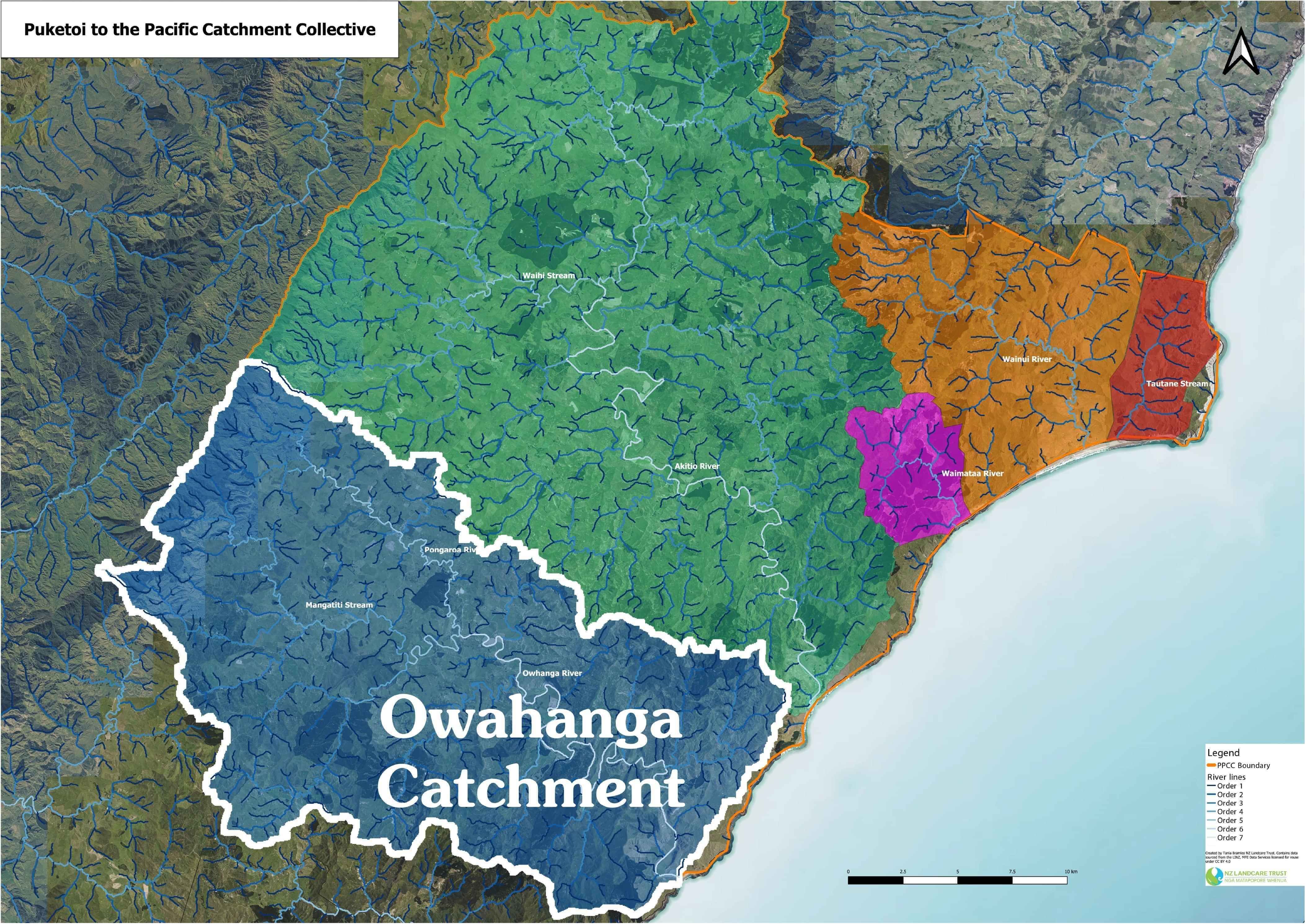
The Owahanga Catchment Group aims to foster within the community an understanding and appreciation of the natural resources the area provides. We record environmental data, champion conservation, and work to protect and enhance our unique environment for future generations.
Our catchment
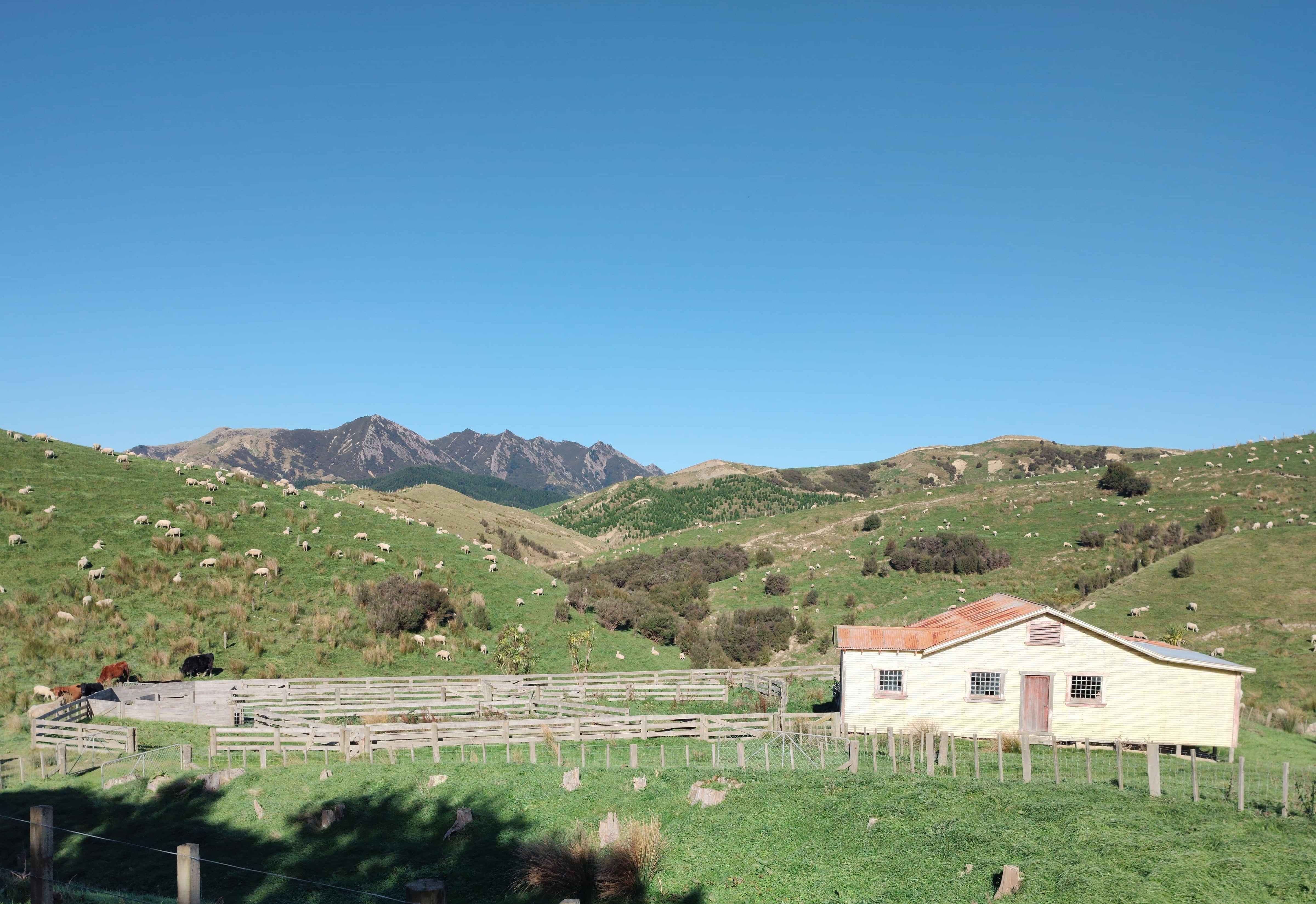
Our two rivers, the Pongaroa and the Owahanga, each make their way through farmland and scattered forest, both native and exotic, before joining to become one known simply as the Owahanga.
Read the Latest Newsletter
Owahanga Catchment Update – January 2026
This update includes:
Catchment priorities for 2026
Enviroschools programme activities
Pest monitoring and management updates
Pest plant programme development
Natural features
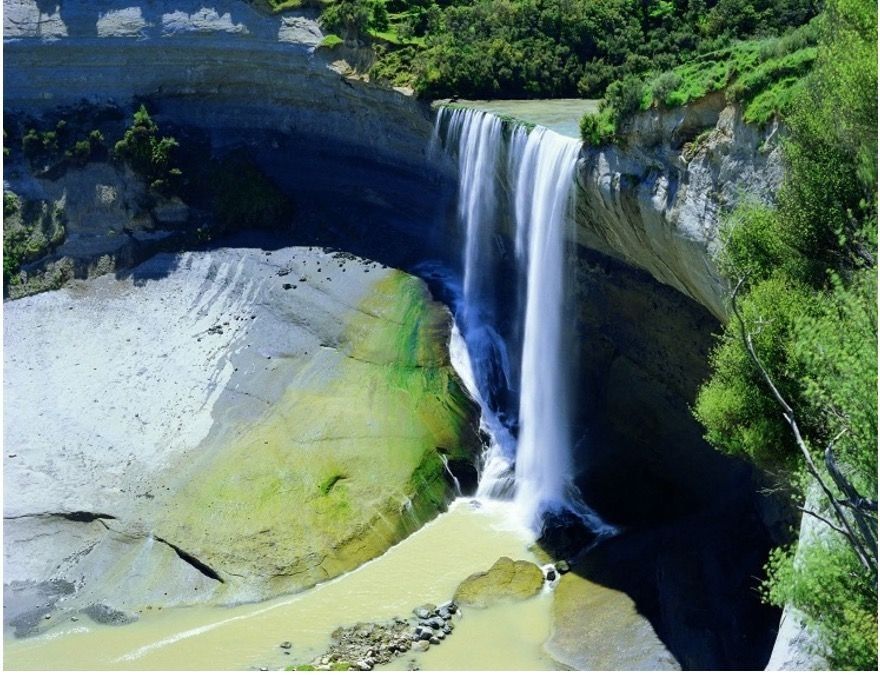
Mangatiti falls - Photo credit to Beef and Lamb.
Read Article here
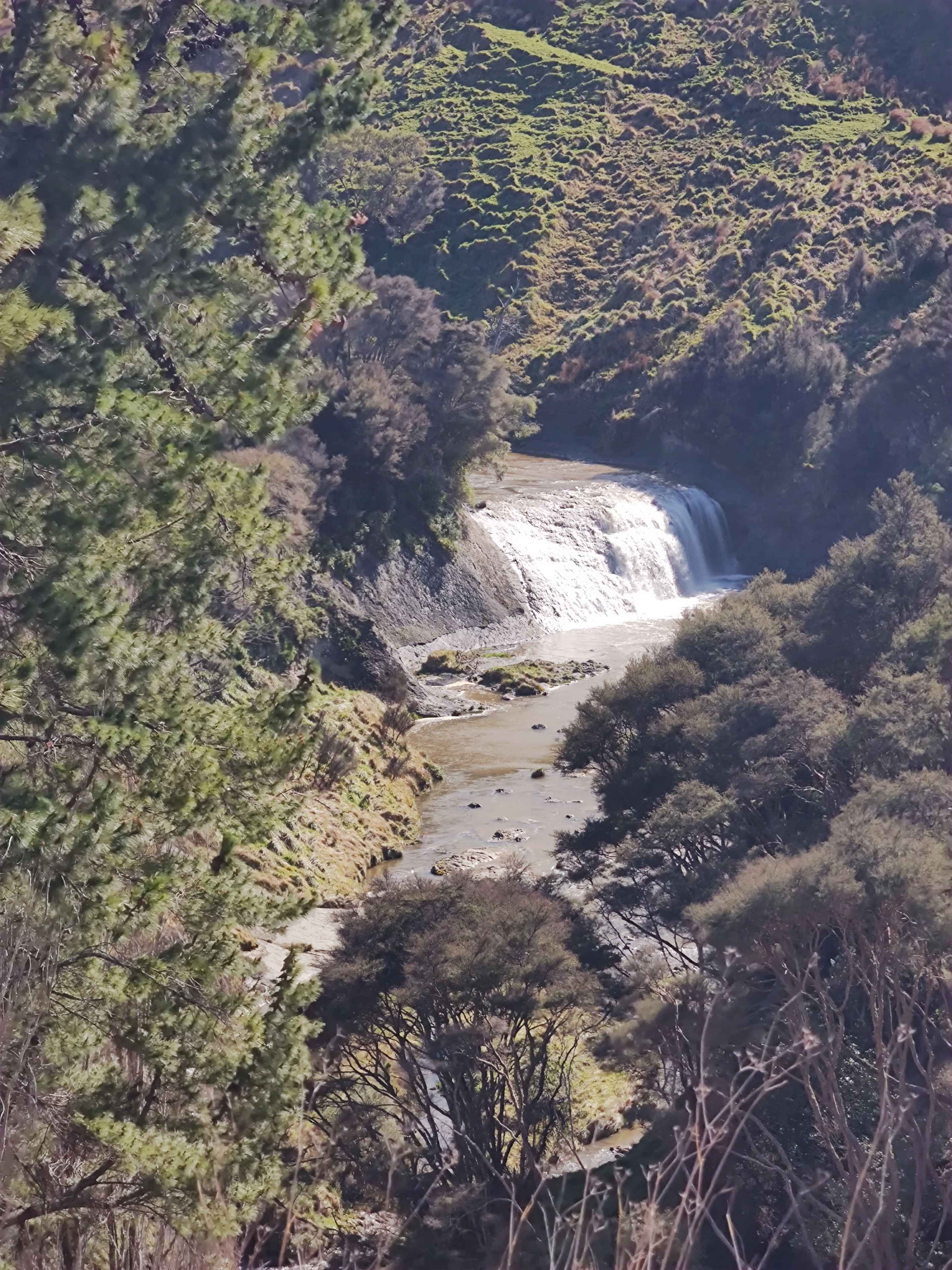
Pongaroa river falls
Two rivers
Just before they join, each flows over its own waterfall, the Owahanga over the Mangititi falls and the Pongaroa over the Pongaroa falls both impressive sights and evidence of the regions active geological past.
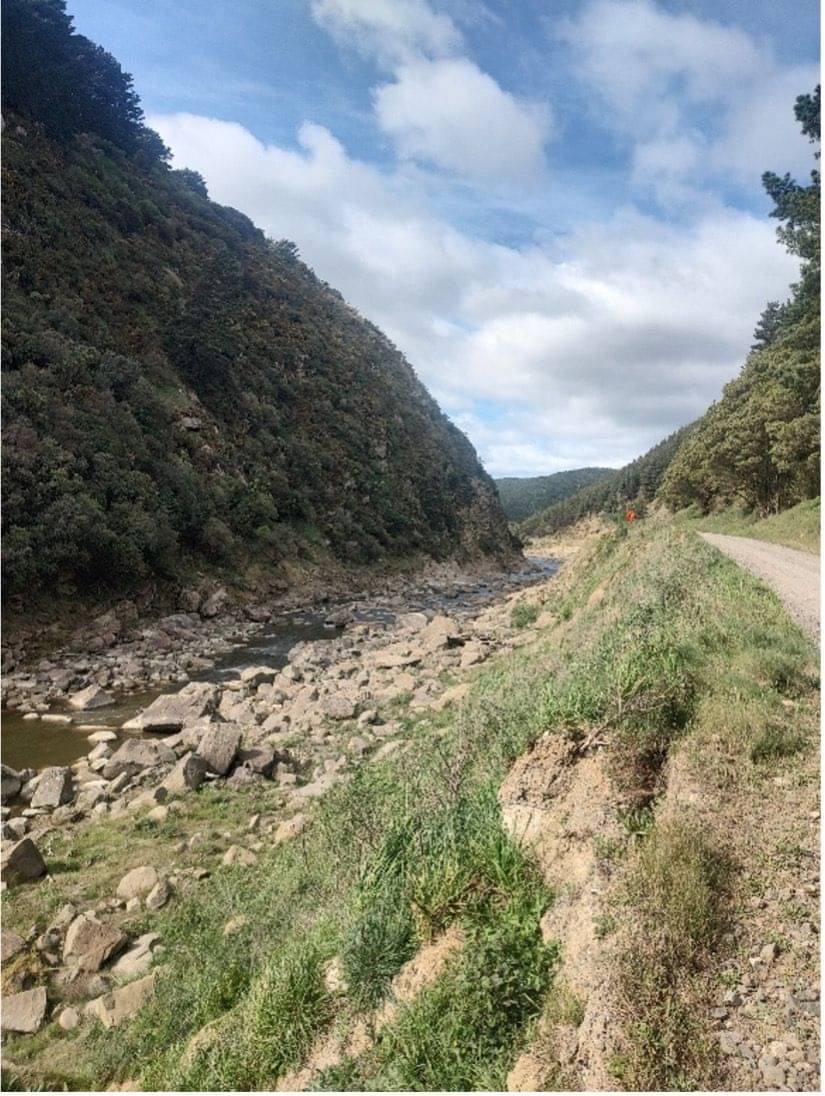
Mariananga Gorge
Further downstream is the Mariananga Gorge cut by the river through a large ridge, which as you drive slowly through it reveals the extensive deformation the land has been through in the past. There are over 20 earthquake faults in this area, part of what is known as the Tinui fault complex.
Earthquakes are a semi regular feature of the entire district.

4 mile Bush Reserve
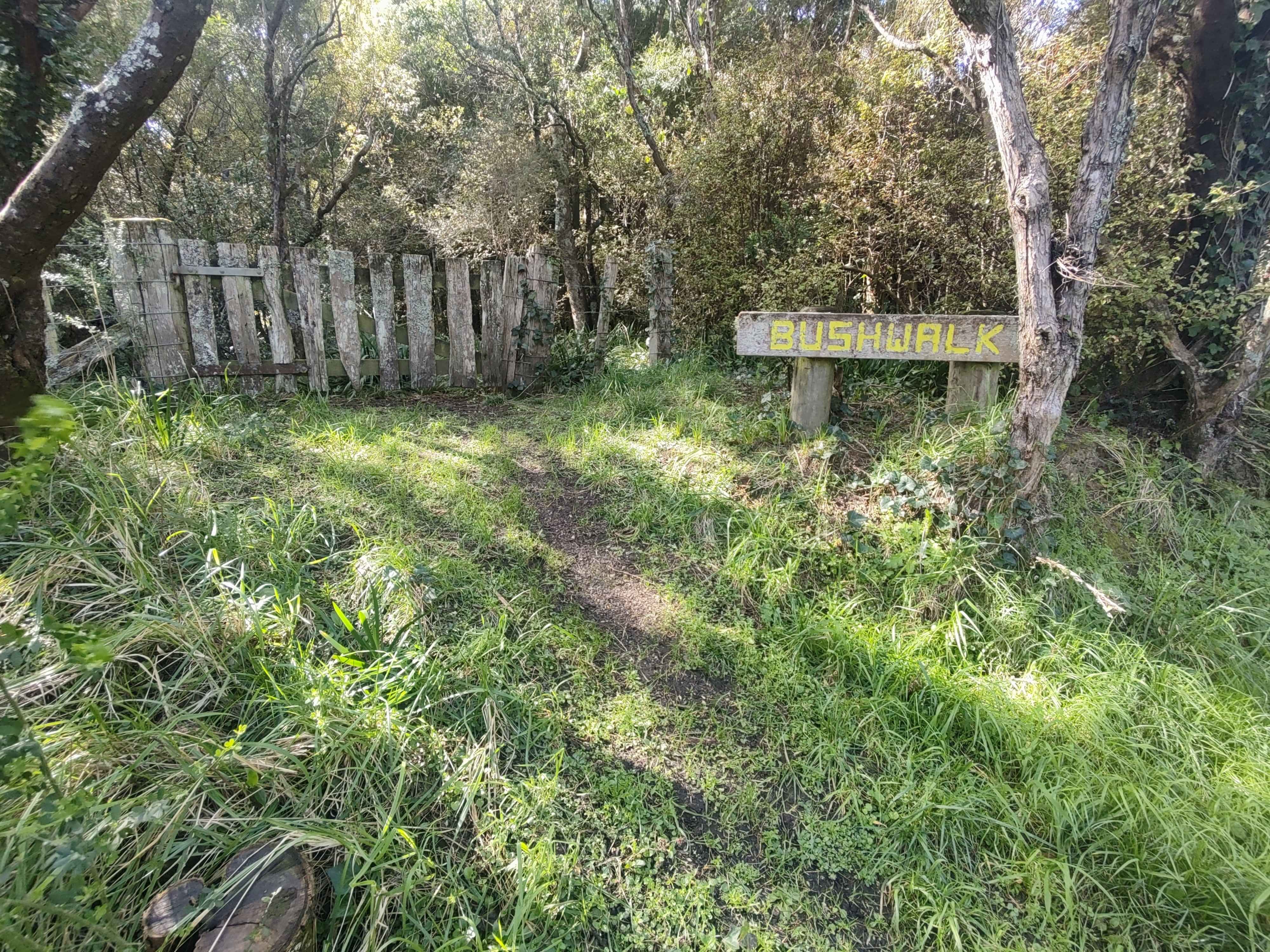
Bush Remnants
Scattered throughout the area are remnants of the 70 mile bush, the great forest that once stretched from Norsewood to Eketahuna and was cleared mostly by Scandinavian settlers.
The most accessible of these are the 4 mile Bush Reserve, a freedom camping area that is extremely popular over the summer and the Pongaroa village bush walk.
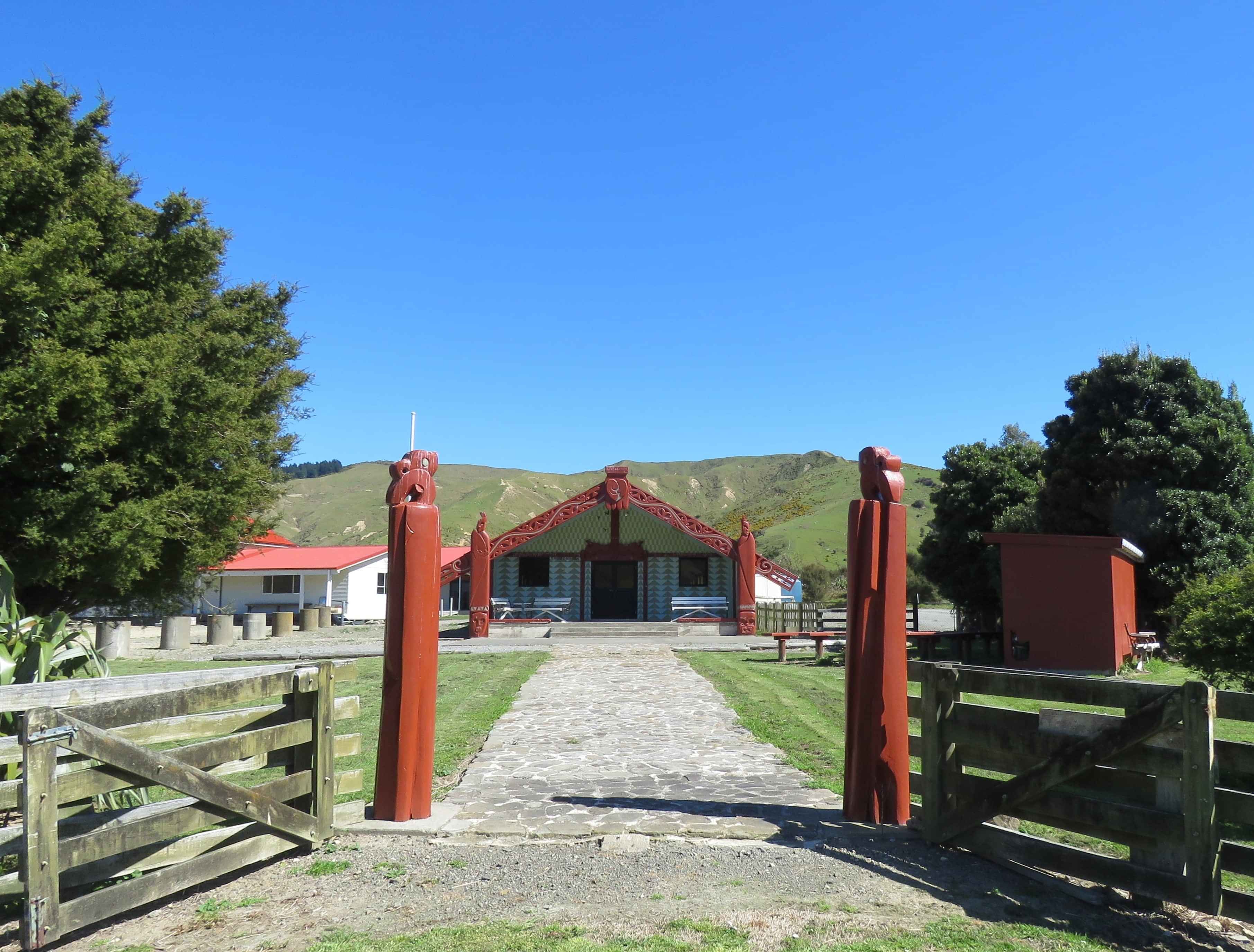
Aohanga marae
Near the river mouth, Papaumu Marae of Ngāti Kahungunu stands as a living connection to tangata whenua. Along the coast, archaeological sites reveal centuries of occupation, reflecting the deep importance of this whenua.
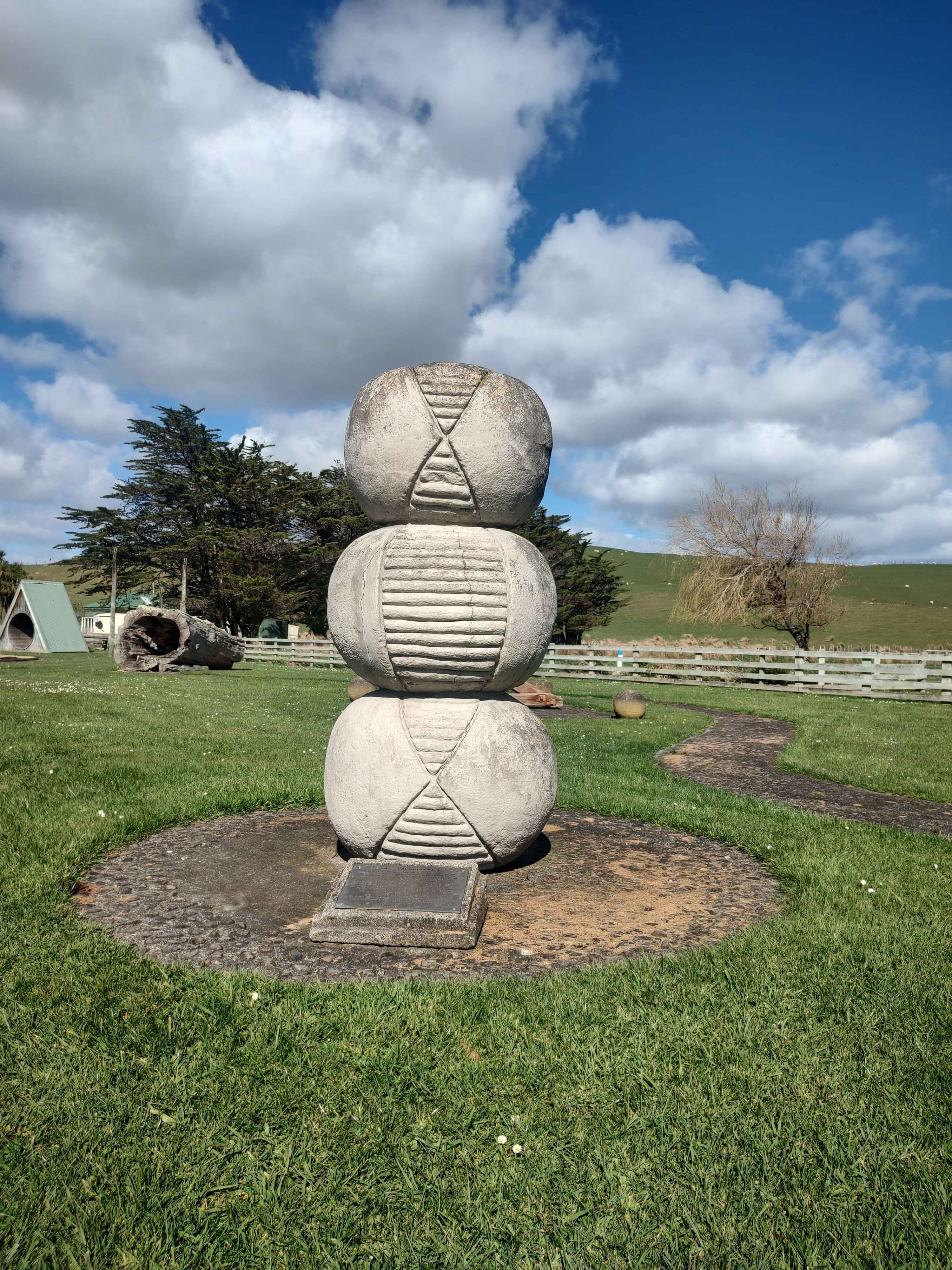
Our community
Pongaroa, the only major settlement, was founded in the 1880s as a timber town and is notable as the birthplace of Maurice Wilkins, co-discoverer of DNA’s structure and New Zealand’s second Nobel Prize winner. A local monument commemorates this achievement, carved from argelite boulders with a double helix motif.
Near the river mouth, Papaumu Marae of Ngāti Kahungunu stands as a living connection to tangata whenua. Along the coast, archaeological sites reveal centuries of occupation, reflecting the deep importance of this whenua.

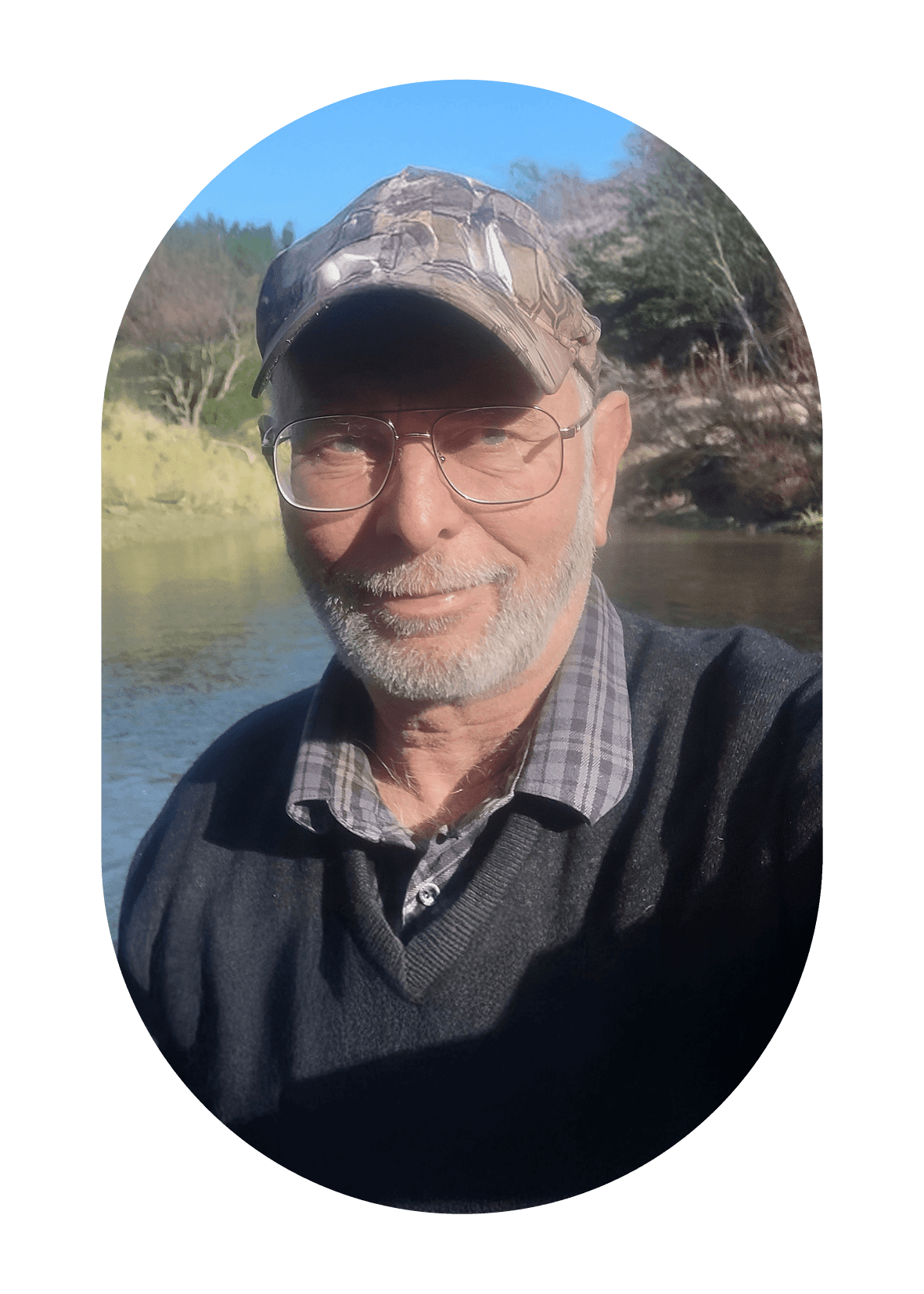
Our Catchment Lead
Mark Wheeler
Mark Wheeler has been living here for 25 years, farming a property where it would be fair to say that the "Owahanga river ruled your life".The farm has now sold, so I’m semi-retired but keep myself involved within the community. I’m on the committee of several local organisations that each make a positive contribution to the welfare of our people and the quality of the environment out here, and becoming involved with the catchment group seemed to be a natural fit alongside that.
Contact
M. 027 290 8088
E. leader@owahanga.org.nz
Thanks to our supporters